
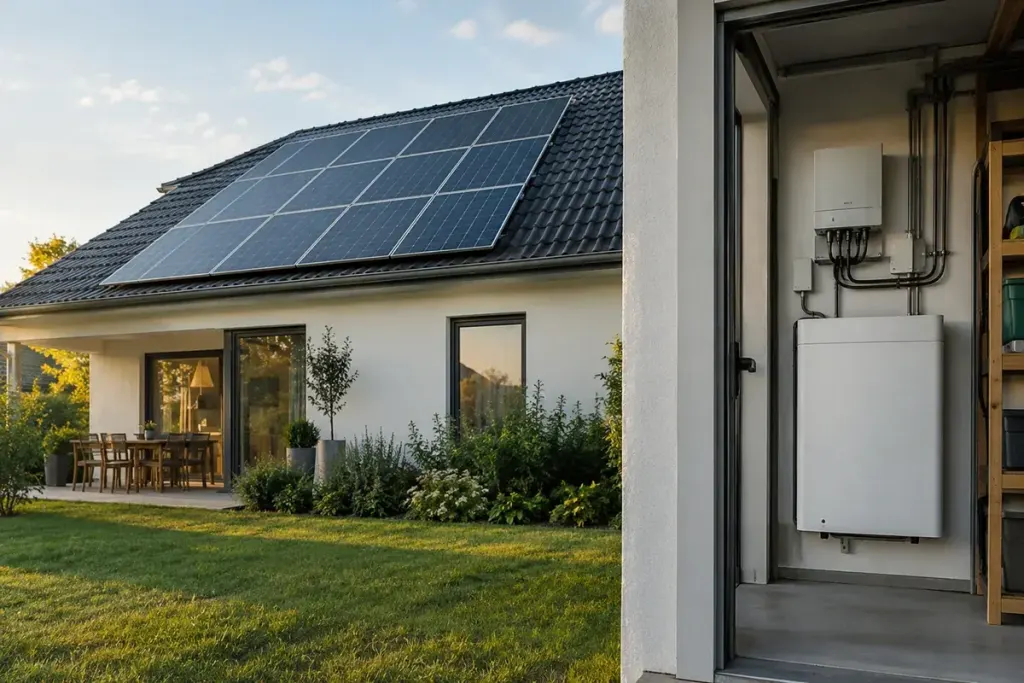
The sun is shining, the roof is covered in panels, and the house still loses electricity when the grid goes down. That can be normal behaviour. A system designed to reduce everyday grid consumption is not necessarily designed to supply the home during an outage.
Backup capability is a property of the complete installation: inverter, controls, storage where required, electrical connections and the loads it is configured to support. The panel capacity printed on a quotation does not answer those questions.
Why the grid connection matters
The US Department of Energy explains that many solar systems disconnect when they detect an unintended island, partly to avoid endangering equipment or workers. Its guide to distributed resources and microgrids describes the distinction between ordinary grid-connected operation and a deliberately controlled islanded system.
That protective behaviour should not be bypassed. A qualified installer must design any backup arrangement to meet the equipment specifications, utility requirements and electrical rules that apply locally.
Ask what remains powered
“Backup included” is too broad to compare quotations. Ask for a list of supported circuits or equipment, the switching behaviour and any limits on simultaneous use. A system that keeps communications and selected lights operating is different from one intended to run a whole home.
Make the questions concrete. Can the proposed arrangement start the refrigerator? Which sockets remain live? Does it support the required pump or other essential load? What happens if several devices start together? Ask the installer to explain the assumptions, rather than estimating from the number of panels.
Storage capacity is only part of the answer
Energy capacity, available output power and the amount reserved for backup all matter. So do the weather, starting charge and consumption during the outage. A single headline runtime without a load schedule is difficult to interpret.
The Department of Energy’s inverter guidance notes that solar-plus-storage can operate without grid support when designed to do so. Do not assume an existing battery or inverter already has that capability, or that any battery can simply be added later.
Request a demonstration and an operating note
At handover, ask the installer how backup operation is tested safely, what the indicators mean and whom to contact if it does not behave as expected. Keep a short list of loads to avoid during an outage and the approved shutdown instructions.
If medical equipment is involved, establish a separate plan with the relevant care and equipment providers. A domestic solar estimate should not be treated as a guarantee of uninterrupted clinical support.
The useful purchasing question is therefore not simply “How much solar can fit on the roof?” It is “What exactly should this installation do when the grid is unavailable, and how will that capability be verified?”