
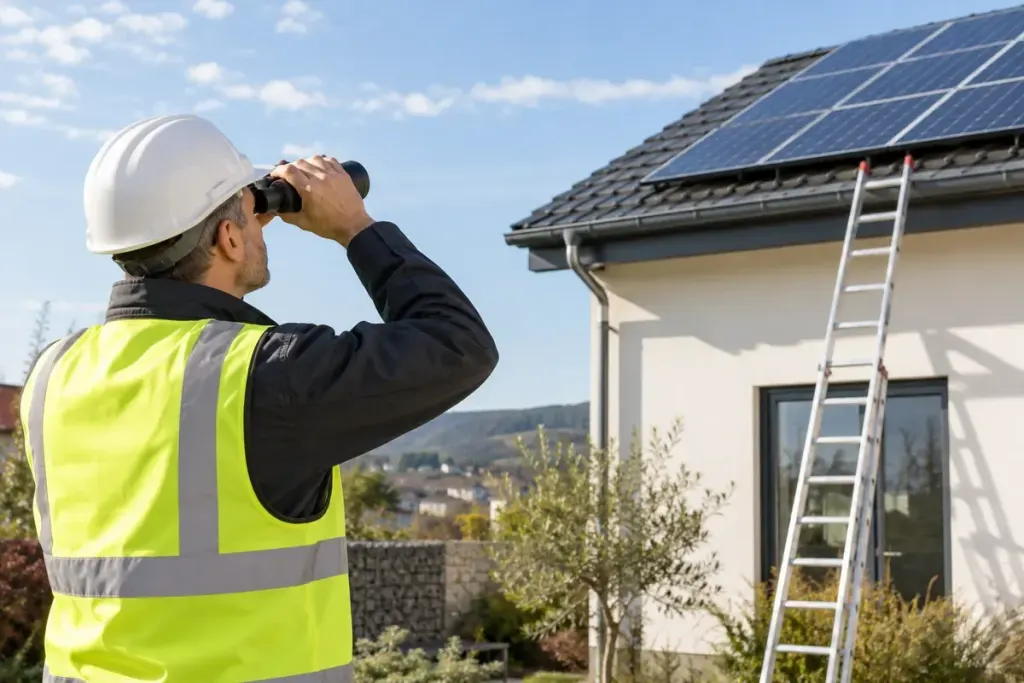
A dusty solar panel is easy to spot from a window. The hazards involved in reaching it are less obvious. Before deciding how to clean an array, establish whether cleaning is needed and who can do the work safely.
The Australian government’s solar-system maintenance guidance describes professional servicing and includes panel cleaning as something to discuss with the service provider. Its advice is a useful starting point; the instructions for your installation and local requirements still matter.
Separate a maintenance question from a production guess
A lower output reading does not prove dirt is the cause. Weather, shading, equipment faults and the comparison period can all affect what you see. Keep the relevant monitoring records and describe the change to the installer or maintenance provider.
Ask whether the array has visible contamination that needs attention and whether the manufacturer specifies an approved method. Avoid assuming that a pressure washer, household detergent or abrasive brush is suitable for the panel surface.
Ask about access before booking
A quote should explain the work, how the roof or ground-mounted system will be approached, and who is responsible for electrical and access safety. Do not walk on panels or climb onto a roof to inspect them because a photograph looks reassuring. A roof can be unsafe even when it appears dry and intact.
Keep the service date, observations and any recommended follow-up with the system documents. If a contractor identifies damage, ask for a clear explanation and the appropriate next step rather than trying to repair a live electrical component yourself.
For a homeowner, the practical job is gathering information: the system model, installation records, monitoring change and accessible photographs taken from a safe position. That gives a qualified provider something useful to assess without turning a small maintenance question into a risky weekend task.