
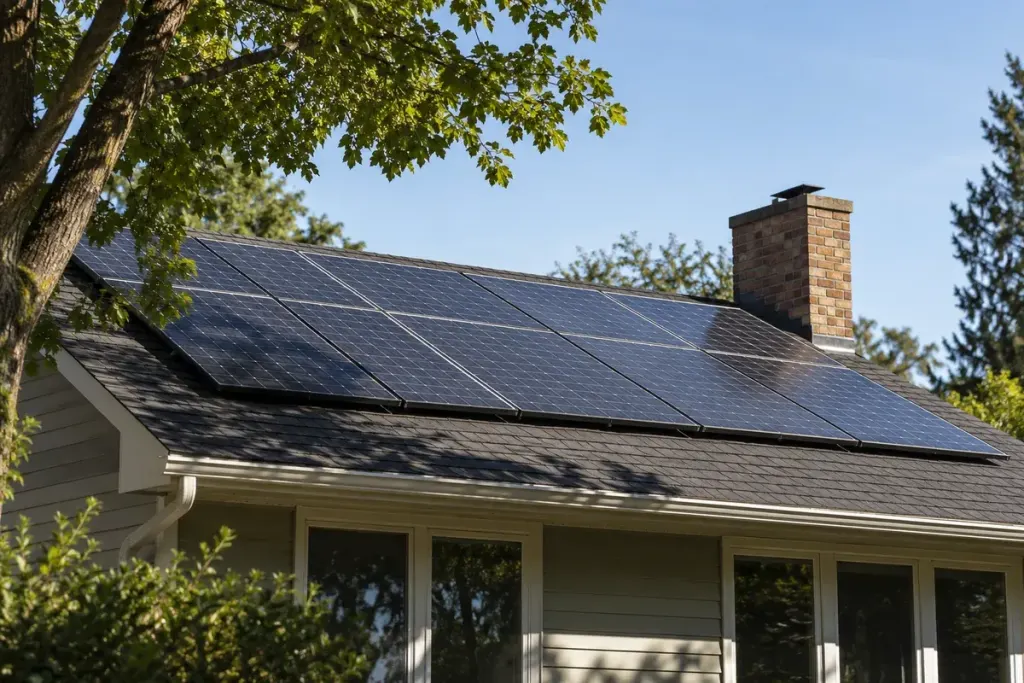
The roof looks sunny at lunchtime, so the solar proposal seems straightforward. Then a chimney shadow crosses one corner in the afternoon. Is that a minor detail or a reason to rethink the layout?
The answer depends on when shade occurs, how much of the array it reaches and how the system is designed. A single photograph cannot settle the question, and a promise that one piece of equipment “solves shade” deserves a closer explanation.
Ask for the time dimension
The US Department of Energy’s homeowner’s guide to solar identifies roof shading as a factor in suitability. Local climate, roof geometry and surrounding objects all belong in a site-specific assessment.
Ask the installer how seasonal sun paths and nearby obstructions were considered. A tree with winter branches and a full summer canopy is not the same obstruction throughout the year. A neighbouring building can matter even when it does not shade the roof during the site visit.
Separate the roof observation from the electrical explanation
Different arrangements of panels, inverters and module-level electronics respond differently to partial shading. Ask the designer to explain the proposed arrangement in plain language, including its limitations. Equipment cannot recover sunlight that never reaches the panel.
A useful question is: “Which panels are affected, at what times, and how is that represented in the annual estimate?” A diagram and a stated assumption are more informative than a general claim about efficiency.
Compare alternatives on the same basis
Imagine two proposals: one uses every available roof section, while another leaves a heavily shaded corner empty. Compare expected generation, equipment, installation cost and maintenance access under consistent assumptions. More panel capacity does not automatically mean a better overall fit.
Keep the assumptions with the quote. Note whether tree growth, future building work or regular cleaning access has been considered. If trimming is proposed, establish ownership, permissions and professional advice; do not treat a tree as an obstacle you can simply remove.
Observe safely, then let the assessment do its job
You can take dated photographs from ground level at different times to support the conversation. Do not climb onto the roof or alter wiring to investigate. Installation and electrical evaluation belong with qualified professionals.
A good shade discussion ends with a layout and estimate whose limits you understand. It does not need to promise perfect sunlight all day; it needs to explain how your actual roof was assessed.